


Challenges in today’s industry such as the great resignation and adapting to a new era of remote work since 2020, have greatly impacted industries like ours which is tech for better and worse in some cases. Remote work is nothing new for us at Wandr. The ability to work remotely has allowed us to tap into more talent than limited to what’s available locally and clients are able to ramp up teams they may have lost within the great resignation.
As mentioned above, some of the challenges currently within the industry stem from the great resignation. The great resignation is a large cultural shift of people leaving their jobs possibly due to job dissatisfaction, cost of living, other opportunities, and so on. This shift has left companies scrambling to make up for lost employees and reach deadlines, leading them to need to quick turnarounds that just aren’t possible. However, for those who see value in what we present and with the allotted proper timeline, companies can utilize design agencies like Wandr to ramp up their process and team which can be an effective solution and investment.
Providing Material for the Design Process

Even more important, is preparing in advance before you meet with a design agency can help speed up the process and the agency can provide a better service. Read our blog about How to Prepare to work with a UX Design Agency for detailed specifications on what we recommend.
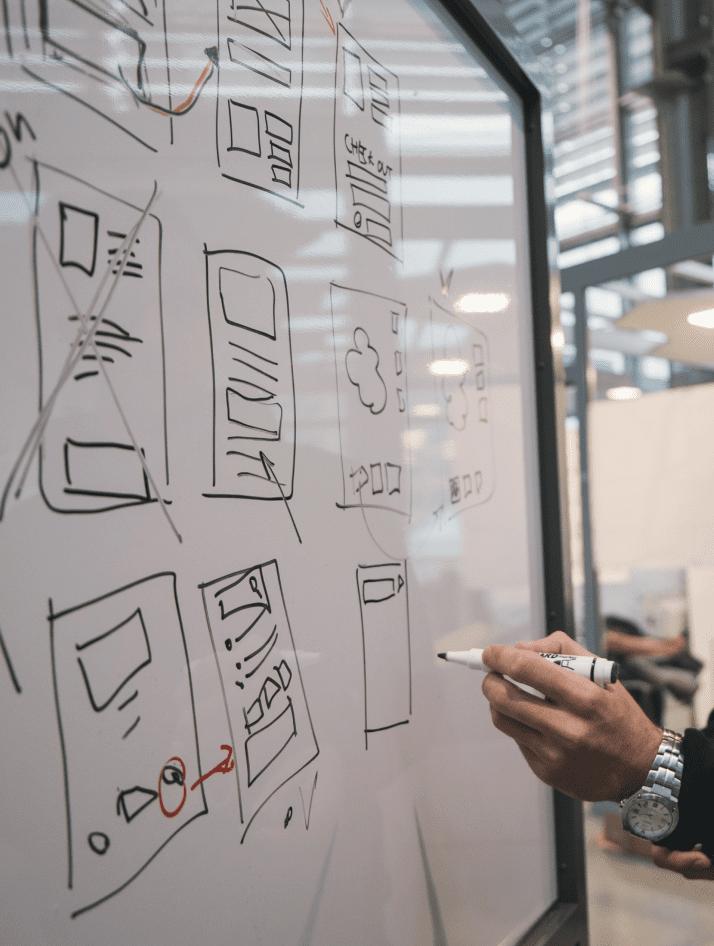
Providing details and the general direction of functionally, can inform a design agency on what they can do to get your product where it needs to be for your ideal. Including things such as service blueprints, information architectures, and user flows clearly laid out can have an extremely helpful in the design process. A great way or analogy to compare this to would be providing the blueprint for a house, and for example they want to build a new bathroom for the house, if the contractor know where the support pillars are or the foundations for the house, they can correctly build without spending time on searching for these elements.
Beyond that when you have everything laid out and well documented, not only can we understand how it all works and how each element interacts to the outcome for the user we can also understand where the designers intention was when creating this blueprint. Especially when we’re talking about complex products and ideas, these elements are extremely valuable to have even just a point of reference for a team.
The Importance of UX/UI
UX/UI goes further than appearance, and some companies treat it as an afterthought. In today’s market, while a company may be feature rich they can still run into issues of discoverability. Sometimes disenfranchising the new users that come on board because they cater to the technically proficient. The big issue these companies are making is not identifying their user personas, and a lot of the time they put a heavy emphasis on pushing the product to market to then get the feedback which is not always revisited. User experience is all about the user, as it states, we want our users experience to be prioritzed and provid an optimal experience.
Once you have invested in user research and have established user personas, you can then turn this research and data into actionable design points so that you are able to create the best possible product.
Hiring Agencies vs. In-House
When deciding between hiring an agency vs. someone who is in-house the difference tends to be the pool of talent you are pulling from and an even more important factor is with an agency you are getting an outsider's point of view. Clients we’ve worked with at Wandr have particularly valued this second aspect a lot. Particularly being able to bring in a trained eye to see what you’re doing and provide feedback, working through that feedback and change with you. When bringing in an expert or trained eye to examine your design processes there may be some things that a company is missing or best practices that they’re not following.
Specifically for Wandr an advantage we have when taking on a project is that we’ve worked across multiple industries, which has helped us identify what is working for each of these different clients to reflect back on and apply in our practices. Another valuable factor is our design quality assurance process, a proven successful process with design leads, strategy leads that will help bounce back ideas within the team.
When we say “pool of talent” we are referring to a large pool of resources, because we have multiple disciplines on your roster with a variety of experience it’s useful to be able to tap into these backgrounds. It’s essentially a higher chance of someone on that roster with relevant experience in what you’re doing for your project. Utilizing the many experiences and backgrounds within an agency you work with can make the difference of creating a multifaceted product in more aspects than a limited team would have.
There is value in investing in an agency in regards to timing as well, for example you could invest in hiring an in-house designer but it will take them time and training to achieve to level you need them to. Whereas with an agency you can implement those changes and fufill that need within a couple of months using a whole team.
Final Thoughts
Knowing what you want, need, and mapping out your goals before meeting with a UX design agency you can get to the vision you want. Even if you haven’t fully gotten to a concrete goal, have an idea and we can go from there, after all you are hiring an agency for that reason.
When clients come in and see the value in design and research, we can have a beautiful partnership and succeed as a company with a return on investment. Design first is one of the wisest investments you can make, so design it think it through and then go build it.
Check out our article on How to Do Competitive Analysis UX.
Interested in working with WANDR? Book a free consultation call with our team.
What Questions Do You Have About the Podcast?
Let us know in the comments below.
Talk to us on LinkedIn, Instagram, Facebook, or Twitter.