


There is a version of every product that works fine.
It uses standard UI components, follows familiar patterns, and looks like dozens of other products in the same category. Users can navigate it. They don't get lost. They complete tasks eventually.
And then they don't come back.
Generic UX design is the product equivalent of a rental car. It gets you where you're going. It doesn't fit you. It doesn't remember you. And it doesn't make you want to come back to it when you have a choice.

Custom UX design is different. It's built around the specific mental models, behaviors, goals, and frustrations of your users -- not the average user across your product category. The gap between those two things is where most products either win or lose.
What Custom UX Design Actually Means
Custom UX design is not about creating a unique visual style or building components from scratch when off-the-shelf ones would work. It's about designing an experience that is specifically shaped around:
- Who your users actually are (not a persona built from assumptions)
- What they're trying to accomplish in your product (not what you think they're trying to accomplish)
- Where they get confused, frustrated, or lost (not where you expect they might)
- What would need to be true for them to trust your product enough to rely on it
This requires research. It requires testing. It requires a willingness to design against your own intuitions when the data says something different.
Generic UX skips most of this. It applies industry patterns because they're familiar and ships something that looks reasonable. Custom UX treats those patterns as starting points, then diverges wherever your users' needs require something different.
Why Generic UX Underperforms
Generic UX design fails for a predictable reason: it optimizes for recognizability instead of fit.
Industry patterns exist because they work for a broad range of users across a broad range of contexts. Your users are not a broad range. They are a specific group of people with specific goals, specific mental models, and specific contexts in which they use your product. The closer your design maps to that specificity, the better it performs.
The most common performance gaps we see with generic UX:
Onboarding drop-off: Generic onboarding flows explain the product and hope users figure out the value. Custom onboarding is designed around the specific moment of value your users need to reach -- and removes everything that stands between them and that moment.
Feature adoption: Generic navigation organizes features by how the product team thinks about them. Custom information architecture organizes features by how users think about the tasks they're trying to complete.
Trust and conversion: Generic trust signals (SSL badges, standard privacy language) are table stakes. Custom trust design identifies the specific concerns your users have and addresses them directly at the moments they matter most.
Retention: Generic products feel replaceable because they are. A product designed specifically around your users' workflow becomes part of how they work. Switching away from it has a real cost.
The Business Case for Custom UX
Custom UX design is an investment. The question is whether that investment outperforms the alternative.
The data from WANDR's client work makes a consistent case.
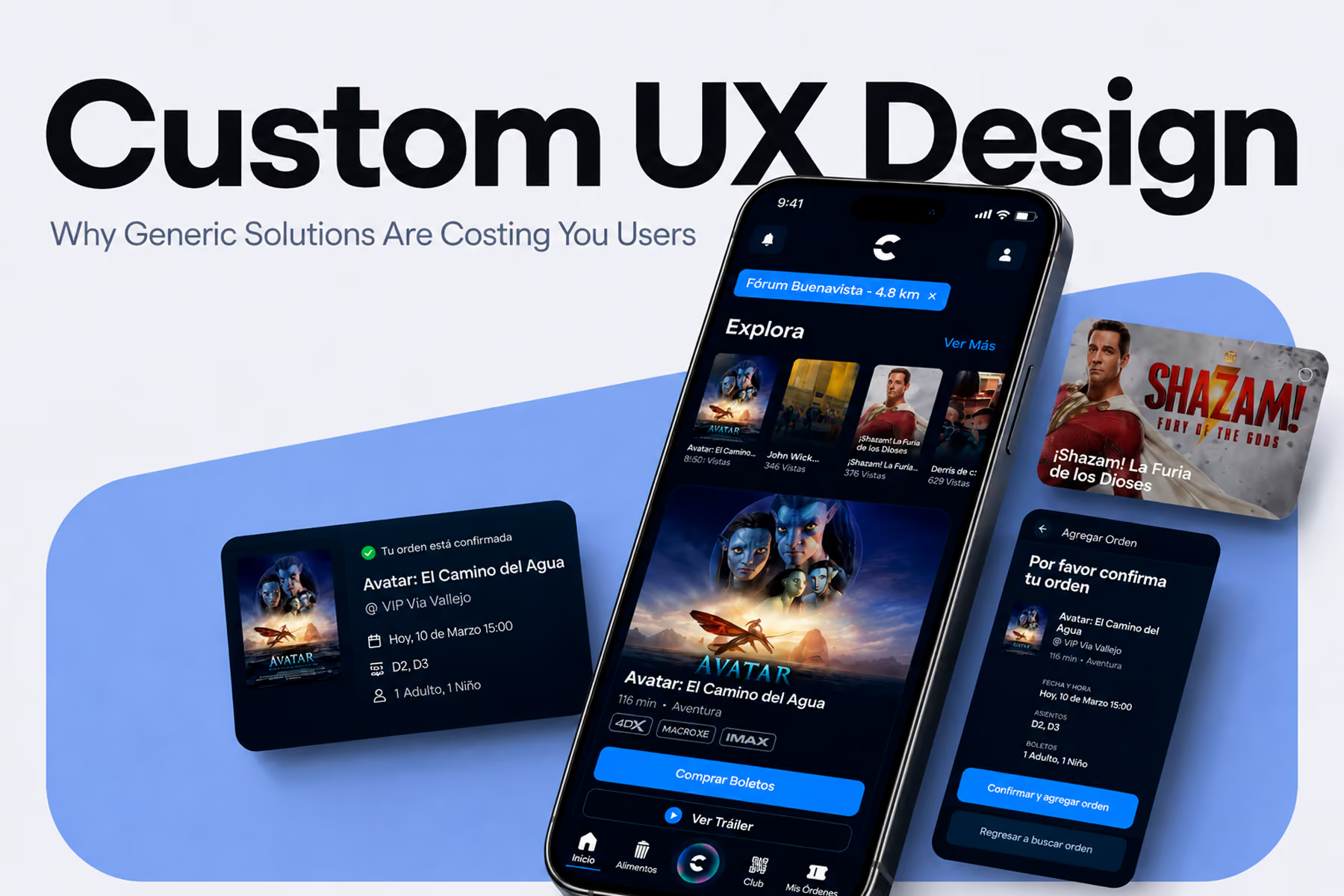
Cinepolis, one of the largest cinema chains in the world, came to WANDR with digital products that were costing them revenue. Their website and mobile app were outdated, unreliable, and making it nearly impossible for customers to buy tickets online. WANDR was embedded in their product team to redesign the experience across their website, mobile app, kiosk interfaces, and back-office systems globally.
The result was a 25% increase in online revenue. Not from adding features. From redesigning how the existing product worked for the people who used it.

Synchrony engaged WANDR across a 3.5-year partnership to design and refine the experience for their Loop and GiftNow products. The starting point was a merchant onboarding process that took 3 to 4 weeks to complete and a cancellation rate of 15%. Custom UX design -- specifically, an onboarding experience designed around what merchants actually needed at each step rather than what the system required -- cut onboarding to 2 to 3 days and dropped cancellations to 1%.

These outcomes are not available from a template.
Where Custom UX Design Makes the Biggest Difference
Not every part of a product requires a fully custom approach. The places where custom UX creates the most measurable impact:
Onboarding. This is where most products lose users permanently. Generic onboarding flows have generic drop-off problems. Custom onboarding is designed around the specific value moment your users need to reach and the specific barriers that stand in their way.
Core workflows. The parts of your product users interact with daily. If those workflows fit how your users actually work, they become habits. If they don't, users find workarounds or leave.
Trust-critical interactions. Any moment where a user is deciding whether to share personal data, make a payment, or commit to your product. Trust is not built by generic design patterns. It's built by experiences that feel specifically designed for the user in front of them.
Error states and edge cases. Generic products often have thoughtful main flows and neglected error handling. Custom UX treats every state -- including failures -- as part of the experience.
Mobile. Mobile context is specific. Users are distracted, operating with limited attention, often doing something else at the same time. Generic desktop-to-mobile adaptations don't account for this. Custom mobile UX is designed for the context, not adapted from a different one.

What the Research Process Looks Like
Custom UX design starts with understanding before it starts with designing.
At WANDR, every engagement begins with research -- user interviews, behavioral analysis, competitive review, and alignment on the specific business outcomes the design needs to support. This is not process overhead. It is the work that makes the design decisions defensible.
The research phase answers questions that can't be answered from inside the product team:
- What do users think they're getting when they sign up?
- Where do they get confused on their first session?
- What's the moment they decide to keep using it or stop?
- What does a competitor do better that users have noticed?
- What would make them recommend it to someone else?
The answers to these questions shape every design decision that follows. Without them, custom UX design is just a more expensive version of generic.
Custom UX vs. Template-Based Design: A Direct Comparison
Template-based design
- Faster to ship initially
- Lower upfront cost
- Looks familiar to users
- Performs to category average
- Requires significant rework when product matures
Custom UX design
- Requires research investment upfront
- Higher initial cost
- Optimized for your specific users
- Outperforms category average when done well
- Scales with your product because it was built for your users
The tradeoff is real. Template-based design is appropriate for early-stage products that need to test whether the idea has merit before investing in experience. Custom UX design is appropriate for products that have validated their core value and need to compete on experience.
Most products that come to WANDR have already passed the template phase. They have users, they have data, and they have a gap between where their product is performing and where it should be.
Signs Your Product Needs Custom UX Design
Users complete tasks but don't come back. The product works but doesn't fit. Generic UX gets people through flows; custom UX makes products feel worth returning to.
Onboarding metrics are stuck. Drop-off in the first session is almost always a custom UX problem. The flow isn't designed around your users' specific path to value.
Feature adoption is lower than expected. Users aren't finding or using features that should be driving engagement. This is usually an information architecture problem that generic navigation patterns can't solve.
Your product looks like your competitors. If a user opened your product and a competitor's side by side, how different would the experience feel? Generic UX produces interchangeable products. Custom UX produces products that feel specifically designed for the people who use them.
Users describe the product as "confusing" without being specific. This is the most common signal of a mismatch between your mental model and your users'. It can't be fixed with templates.
The Cost of Not Investing in Custom UX
Generic UX doesn't fail dramatically. It underperforms quietly.
Users don't churn all at once. They drift. They find alternatives that fit their workflow better. They use your product for the minimum they have to and don't expand their usage. They don't refer others because the experience isn't remarkable enough to mention.
This kind of quiet underperformance is hard to attribute to UX because it doesn't show up as a specific event. It shows up as growth that's slower than it should be, retention that's lower than the category, and conversion rates that plateau no matter what you test.

Custom UX design is what closes that gap.
WANDR works with product teams across fintech, enterprise software, gaming, SaaS, and nonprofit platforms to design experiences that are specifically built for the users who rely on them. If your product is performing below its potential, the answer is rarely more features. It's usually better fit between the product and the people using it.
Talk to a UX expert about your product
