

Your product has friction you can't see.
A UX audit finds it before it costs you more.

WANDR provides structured, evidence-based UX audit services for SaaS products, digital platforms, and enterprise software teams. We identify exactly what's broken, why it's happening, and what to fix first — without guessing or redesigning blindly.

"Their UX/UI leader is talented and fast; our team likes WANDR."
Executive · Tracer Labs
"They would often make changes during meetings rather than waiting for the next call."
Dan Quirk, Head of Marketing, ScaleMatters
"Not only we are very happy with their work, but we also got new friends. WANDR guys are amazing."
Marcio Alexandroni, CTO, Areatec Tecnologia (DigiPare)
Research-driven. Senior-led. Results-guaranteed.

UX Audit Services Built on a Decade of Cross-Product Pattern Recognition

Ten years. 200+ products audited. After that many engagements the patterns stop being surprises: the drop-off points, the navigation traps, the onboarding moments where users quietly give up. We know where to look before we open your product.

We've audited across SaaS, fintech, enterprise software, healthcare technology, nonprofits, and federal government, bringing the same research-first, evidence-driven approach to every one.

We don't deliver a report. We deliver a prioritized list of what to fix and in what order, backed by real user behavior, so your next sprint starts with evidence instead of debate.

Dotted world map showing Wandr locations
Proven impact

UX audits that gave teams
a clear path forward.

Two case studies that illustrate what embedded UX with research, strategy and execution looks like when it ships.

FINTECH · WEALTH PLANNING PLATFORM

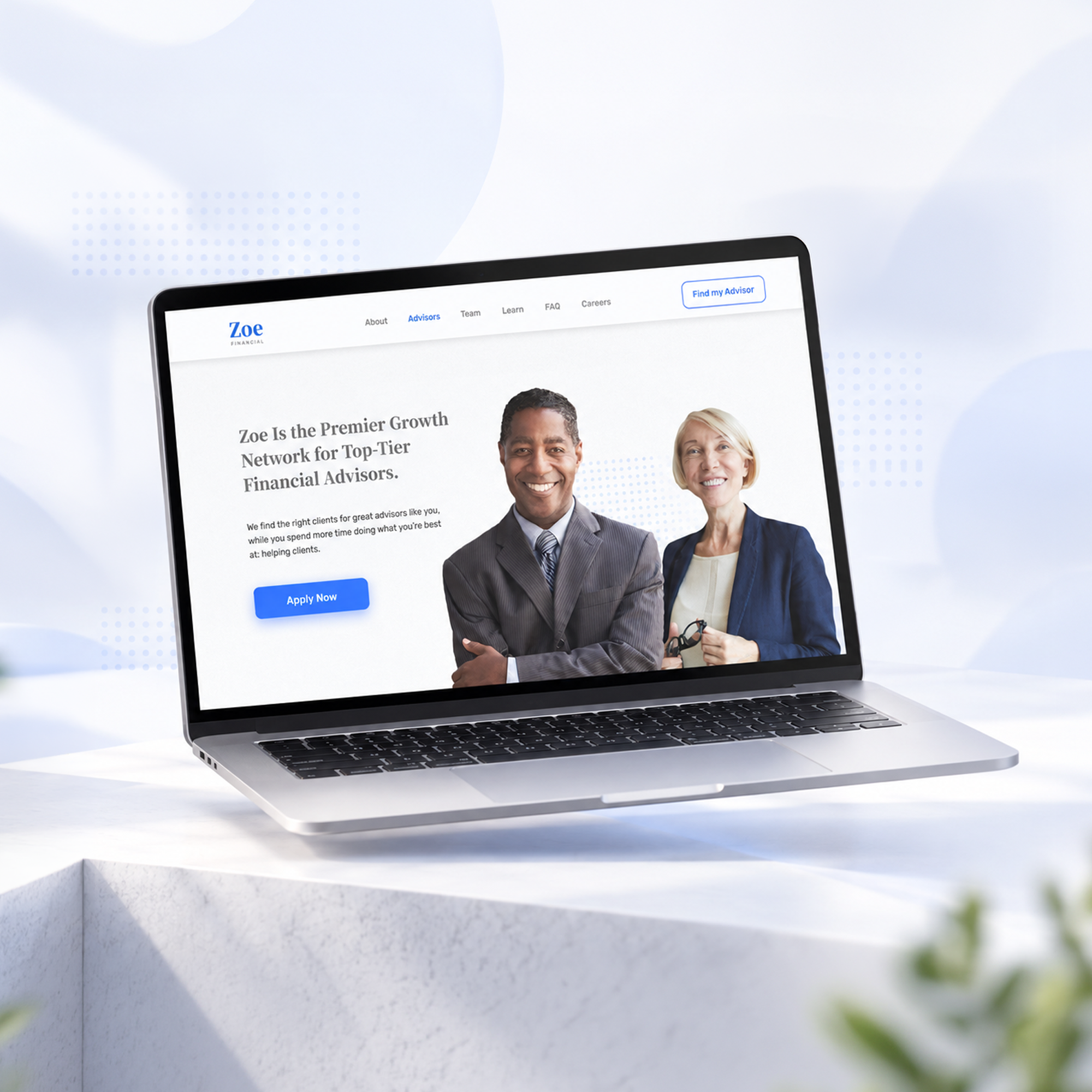
Zoe financial

175%Self-scheduling conversion, from 8% to 22%.

A trust-sensitive category where prospects judged credibility in seconds, then hit an onboarding flow asking for sensitive financial details before it had earned them. Conversion sat near 10% against a 20% target. We resequenced onboarding so value came before the ask, rebuilt the brand, and left a design system behind.

“We’re already getting traffic and seeing growth in our marketing funnels, and I attribute most of that to their deliverables and the fact that they were on point with their initial research.”Dillon Ferguson - Head of Product, Zoe Financial
See full case study
Zoe Financial • FintechZoe Financial • Fintech
No-Code Game Creation Platform

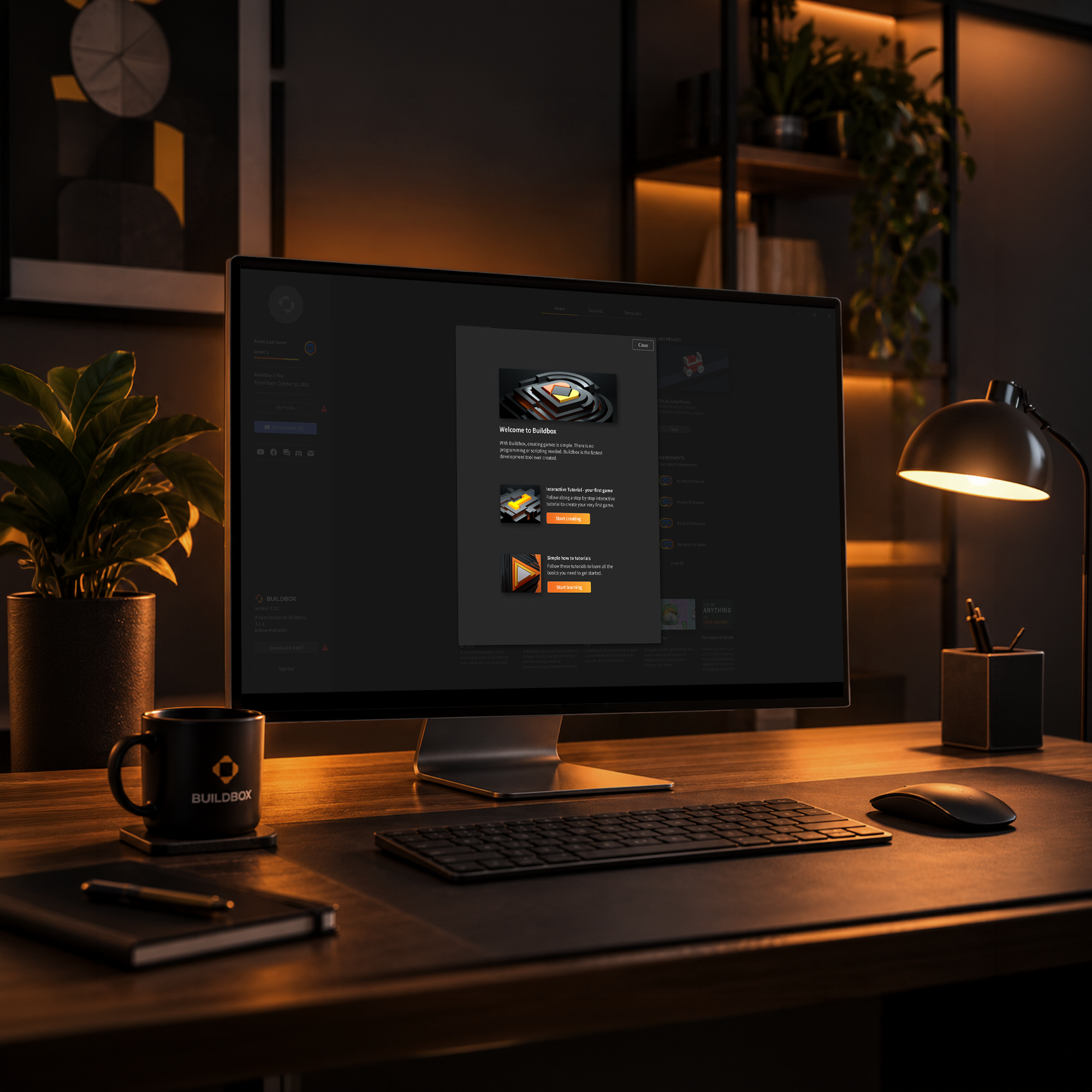
Buildbox

41%more users reached their first success milestone after the desktop app was reimagined.

Buildbox had a no-code platform used by millions, but new users abandoned it before finishing a first game, and any fix risked disrupting the creators who already knew the tool. No design operations. No validated user journeys. Wandr's UX audit combined heuristic evaluation, funnel analytics, heatmaps, and session replays to pinpoint exactly where new users dropped off, so onboarding could be rebuilt without rewriting what legacy users already relied on.

"I really like their hands-on approach because it made them feel more like a partner. It was huge that they were flexible, too. That made for amazing customer service."Douglas Mason - SVP of Design, Buildbox
See full case study
No-Code Game Creation PlatformNo-Code Game Creation Platform
Case 01 / 02
Drag / scroll
By the numbers

A decade of UX audits, on the record.

200+
products audited and designed across a decade
5 Day
turnaround on 1 major flow
03drop-off
15%
avg reduction in user drop-off after audit recommendations
04task completion
53%
avg improvement in task completion rate post-audit
05Findings
12
avg number of high-impact friction points identified per audit
06ACCESIBILITY
WCAG
conformance reviewed on every audit
See case study
Trusted by
WWFMFAMFAMFAMFAMFAMFAMFAMFAMFAMFAMFAMFAMFAMFAWWFMFAMFAMFAMFAMFAMFAMFAMFAMFAMFAMFAMFAMFAMFA
The reality

Every team has a theory about what's broken.

Most of them are wrong.

01 / 04
70%
of digital products fail due to poor user experience — not poor technology.
Forrester Research
01 / 04
1.3M+

average cost of a major product redesign that could have been avoided with earlier UX validation.

IBM Systems Sciences Institute
01 / 04
5x

cheaper to fix UX problems during the design phase than after development is complete.

IBM Systems Sciences Institute
01 / 04
85%

of usability problems can be identified with just 5 users in a structured usability test.

Nielsen Norman Group

Start with evidence,
not opinions

Every UX audit starts by looking at real data: behavioral analytics, user interviews, and expert evaluation. We don't rely on opinions about what's broken. We find out.

5 phases →
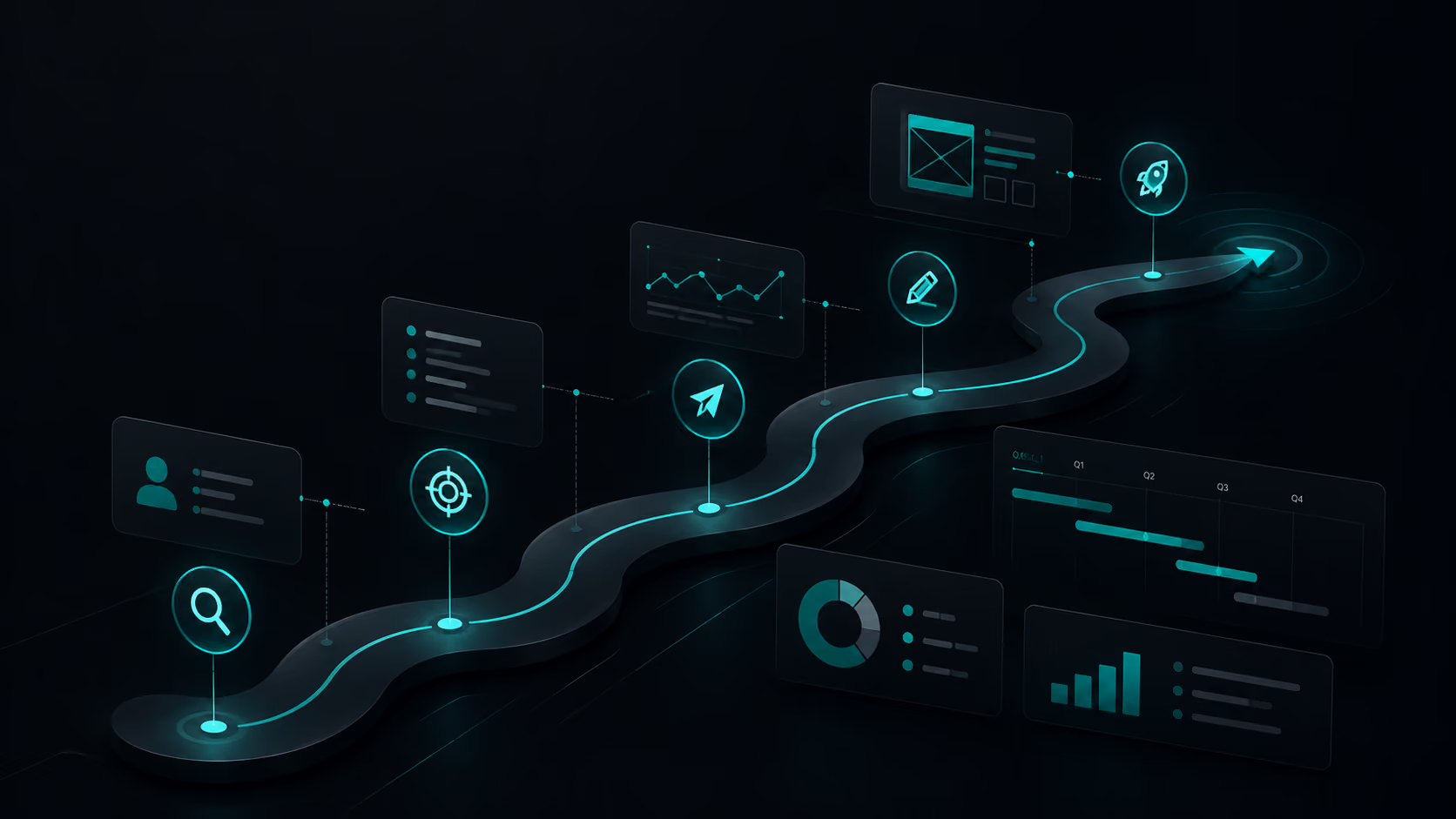
Phase 01Discover
01

Audit Scoping & Alignment

We align with your team on business goals, success metrics, product context, and constraints. Every audit is scoped to the friction points most likely to impact your specific growth goals… not a generic checklist.

Phase 02Plan
02

Data & User Insight Gathering

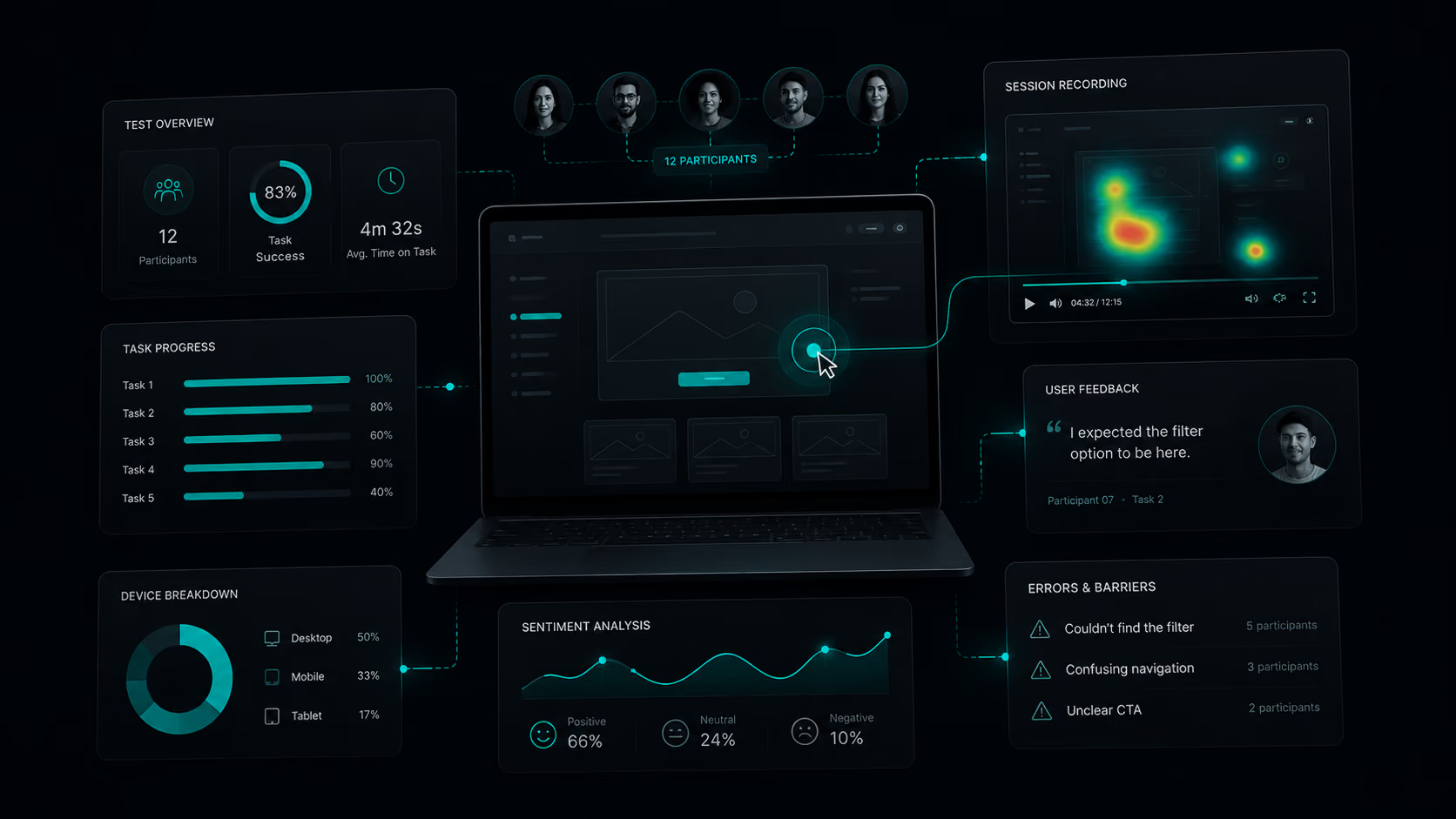
We analyze behavioral data and conduct user interviews to surface both quantitative patterns (where users drop off) and qualitative insight (why they do). Numbers tell you what. Users tell you why.

Phase 03Design
03

Expert UX Evaluation

Our senior team performs heuristic evaluation against Nielsen Norman Group standards and accessibility review against WCAG guidelines, identifying usability issues users feel but can rarely articulate.

Phase 04Deliver
04

Synthesis & Prioritization

Findings are consolidated into clear themes and prioritized by business impact, effort, and risk — not subjective severity scores. Your team gets a clear answer to "what should we fix first and why."

Phase 05Measure
05

Actionable Deliverables & Walkthrough

You receive a prioritized UX recommendations report, annotated screen markups, a sprint-based improvement roadmap, and a PDF stakeholder summary, plus a live walkthrough with your team so nothing gets lost in translation.

Phase 01 of 05
→ Continue scrolling
Deliverables

What you get with WANDR's
UX audit services

Six components that scope to your product and goals, from behavioral analysis through to a prioritized roadmap. Not a checklist.

Wireframing and prototyping preview
01 / 06Analytics & Behavioral Analysis

Analytics & Behavioral Analysis

funnel analysis, drop-off mapping, usage pattern review

Wireframing and prototyping preview
02 / 06User Interviews

User Interviews

in-depth sessions to uncover the real reasons users struggle or abandon

Wireframing and prototyping preview
03 / 06Heuristic Evaluation

Heuristic Evaluation

expert review against Nielsen Norman Group's 10 usability heuristics

Wireframing and prototyping preview
04 / 06Accesibility Assesment

Accesibility Assesment

WCAG-related issues, contrast, hierarchy, interaction clarity

Wireframing and prototyping preview
05 / 06Sprint-Based Roadmap

Sprint-Based Improvement Roadmap

prioritized action plan your engineering team can execute immediately

Wireframing and prototyping preview
06 / 06Stakeholder Walkthrough

Stakeholder Walkthrough

live session to align product, design, engineering, and leadership

Compare

How our UI/UX
Design Agency compares

In-House UI/UX HiringTraditional Agencies
Speed to startSlow hiring cyclesHeavy onboarding processReady within days
ScalabilityHard to scale up or downFixed team, fixed scopeFlexible engagement size
RiskRisky long-term hireNo product ownership post-deliveryEmbedded partner with accountability
PerspectiveToo close to the productDetached, vendor-styleOutside objectivity with inside commitment
Product thinkingExecution-focusedDelivery-focusedStrategy + execution
PushbackUnlikely to challenge leadershipUnlikely to risk the contractWe challenge bad ideas
What our clients say
Verified Clutch reviews.

WANDR’s resources are talented and fast, and we’re pleased with their work. The team is truly customer-focused and gives good advice on how to make changes efficiently. They continue to be in our corner, rooting for us to get the product out. The team is proactive.

Patrick MoynihanPresident, Tracer Labs
See full Clutch review

The communication and support were top-notch, and that made for an enjoyable experience. We’re moving onto the development phase now, and WANDR is still willing to answer our questions and provide additional services as needed.

Dillon FergusonHead of Product, Zoe Financial
See full Clutch review

The process has been very successful, and I’m very satisfied with the work, team, and results. The platform is the first sponsorship platform in Latin America, with the biggest data on events and talents in the world.

Isabella GuerreroFounder, Sponzo
See full Clutch review
Why Wandr?

Our UX Audit Service Gives You a Roadmap to Success,

and We Guarantee It.

01 · Our Team

Senior UX experts, not junior reviewers.

Every audit is led by senior designers with cross-product experience. You get pattern recognition from hundreds of products, not a checklist from someone who's only seen yours.

01
02 · Method

Evidence-based, not opinion-based.

We combine behavioral data, user interviews, and expert evaluation. Every finding is connected to a measurable business impact (conversion, activation, retention, or support load) and prioritized by risk and effort, not subjective severity.

02
03 · Terms

A roadmap you can act on, or you don't pay for it.

Every finding comes with a recommended fix, an effort estimate and the metric it moves. If the audit doesn't surface problems your team considers worth fixing, we don't invoice.

03
The difference

Thirty apps to cover fifty cities.
We consolidated them into one.

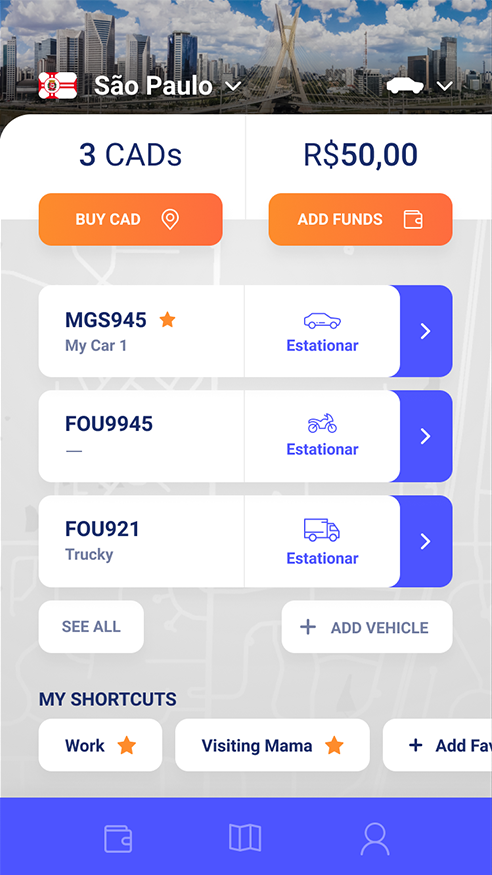
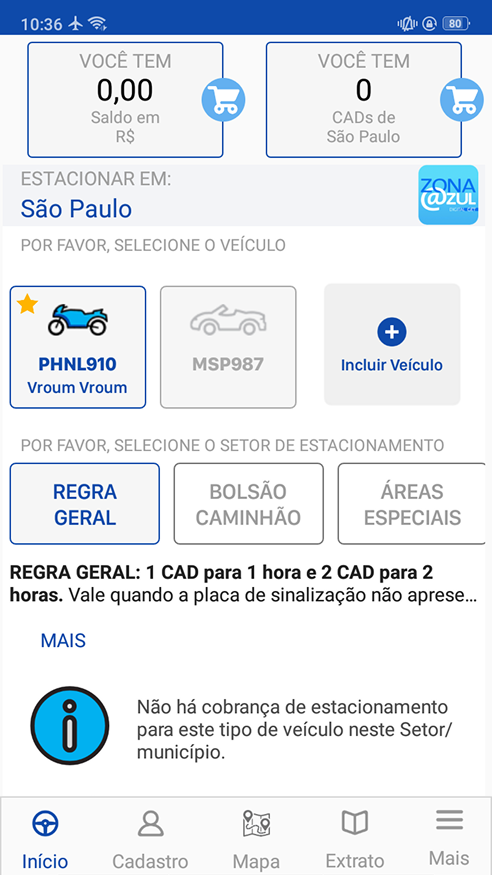
Areatec came to us with a parking app carrying nearly 50 city-specific rule sets, while the closest competitor was shipping 30 separate apps to solve the same problem. Here's what changed.

BeforeAfter
Before WANDR — DigiPare:
  • Paying for a single parking space ran through thirteen distinct stages
  • Around 50 municipalities, each with its own tariffs, time limits and credit units, with the driver left to absorb the difference
  • The closest competitor had solved fragmentation by shipping more than 30 separate apps, one per city
  • A brand still promising "the digital blue zone" as bike locking and scooter charging were being added
After WANDR — DigiPare:
  • One interface designed to serve roughly 50 cities without forking the product per municipality
  • Repeat parking reduced from a thirteen-stage flow to a few taps, using saved vehicles and named shortcuts
  • Parking and bike locking unified under one mental model instead of two separate apps
  • Areatec rebuilt its backend services to match the new design system
Digipare·Smart Parking·TRANSPORTATION
Who this is for

You know something is wrong with your product. The data shows it, your support tickets confirm it, your users hint at it. But your team is too close to see it clearly. You need an outside perspective that tells you exactly where the friction is, why it's there, and what to do about it.

We work with CTOs, Heads of Product, and founders who are at an inflection point, before a redesign, after a growth plateau, or when confidence in the product experience starts to erode. You don't need someone to validate your assumptions. You need someone to challenge them.

First step
Not ready to commit? Let us review your product first.

Send us your product. We'll identify the top 3 UX friction points costing you activation and retention. Free, no pitch, no obligation.

Get your free UX review
Sample report
your-product.com/signup

Get started in seconds.

1No value prop above fold
2No password rules shown
3CTA hierarchy unclear
UX Audit Services
Frequently asked.

Click any question to expand. If yours isn't here, write to us.

  1. A UX audit is a structured, evidence-based evaluation of how users experience your product. It identifies where friction, confusion, or inefficiency is preventing adoption, conversion, or retention, and it tells you which of those problems are worth fixing first. It matters because most products do not fail on technology. They fail because nobody validated the experience before shipping, and by the time the metrics show it, the cost of fixing it has compounded. A UX audit is not a critique or a checklist exercise. It is a decision-making tool. The point is to know what to fix, what to leave alone, and where investment will return the most, before you commit engineering time to a redesign.
  2. We will audit one major flow for free to identify 3 friction points to fix right away.   A more comprehensive audit for one major flow will cost $499.  For a full audit of your entire product (in addition to your product team and design operations workflow), pricing depends on a few factors such as, how many user flows are in scope, how much primary research is required, how complex the product is and the composition of your team. What moves the number: The number of distinct user types. Auditing one persona is not the same problem as auditing an admin, an analyst, and an auditor. Whether user interviews are included, and whether you can provide access to users or we recruit them. Whether you already have behavioral analytics in place. If the data exists, we move faster. Accessibility scope. A WCAG conformance review adds time. We scope and price every engagement before work starts.  If you want to see how we work before committing to anything, we will review one key user flow and identify the top friction points at no cost.
  3. This is the most common question we get, and the answer usually depends on what you already know. You need a UX audit if you can see that something is wrong but cannot explain why. Metrics have plateaued, users are dropping off, feedback says "confusing" without specifics. An audit tells you what is actually broken and what to fix first. You need user research if you do not yet know who your users are or what they are trying to do. Research answers questions about people. An audit answers questions about your product. You need a redesign if you already have evidence about what is broken and you have decided to act on it. If you do not have that evidence, a redesign is an expensive guess. Most teams who come to us thinking they need a redesign actually need the audit first. It costs less, takes weeks instead of months, and it frequently reveals that the problem is contained to two or three flows rather than the whole product.
  4. UX audits are most valuable at inflection points, when a decision is coming and the cost of getting it wrong is real. That usually means one of these is true: Conversion, activation, or retention has plateaued or declined Users are dropping off and your analytics show where but not why Feedback describes the product as confusing or clunky without pointing at a cause A redesign is being discussed and it feels risky without evidence Accessibility or consistency issues are becoming expensive Competitors are outperforming you despite comparable features The short version: if confidence in your product experience is eroding, an audit is the fastest way to get it back. To get started we need access to your product, whatever behavioral analytics you have (Google Analytics, Mixpanel, Hotjar, FullStory), and alignment on which flows concern you most. We handle everything else.
  5. A Wandr UX audit includes: Behavioral and funnel analysis User interviews to surface the reasoning behind the behavior Heuristic evaluation by senior practitioners Accessibility assessment Competitive benchmarking Annotated screen-level findings with a prioritized roadmap It does not include: Full redesigns or visual rebrands (although we may produce mockups) Feature ideation unrelated to identified UX issues Subjective opinions without supporting evidence That last exclusion is deliberate. Anyone can tell you what they would have done differently. The value is in findings you can defend to a stakeholder who disagrees.
  6. You receive an implementation-ready audit package: Prioritized UX recommendations, each tied to a business metric Annotated screen markups showing exactly where the problems are A sprint-based improvement roadmap your team can pick up directly A PDF summary and a live stakeholder walkthrough The walkthrough matters more than people expect. A document gets skimmed and shelved. A working session gets your product, engineering, and leadership aligned on the same priorities in one hour. Every finding is connected to a measurable impact (conversion, activation, retention, or support load) and prioritized by risk and effort rather than a generic severity score. So the roadmap is sequenced by what will move the number, not by what is easiest to describe. After delivery you have three options: your team implements it, we implement it with you, or we embed designers into your team to work through the roadmap. Most clients start with the first and come back for the third once the roadmap proves out. We back the audit with a guarantee. If you do not walk away with actionable clarity, we keep working until you do.
  7. Our free audit takes 2 business day turnaround, whereas our $499 audit takes 5 business days.   A more comprehensive customized audit, typically runs between two and eight weeks. A focused audit of a single critical flow can be done in two to three weeks. A comprehensive audit of a complex enterprise product with multiple user types usually runs six to twelve weeks. The variable is research depth, not product size. We give you a firm timeline during scoping, before the engagement starts.
  8. A heuristic evaluation is expert opinion. A senior practitioner reviews your interface against established usability principles and documents where it deviates. It is useful, fast, and cheap, and it has a real limit: it tells you what an expert thinks, not what your users do. A Wandr UX audit includes heuristic evaluation as one input among several. We combine it with behavioral data, real user interviews, accessibility assessment, and competitive benchmarking. Findings are validated against what users actually do rather than what a principle predicts they should do. The practical difference shows up in prioritization. A heuristic review returns a list of violations ranked by severity. An audit returns a list of problems ranked by business impact, which is the ranking that survives contact with a roadmap discussion.
  9. Partly, and it depends on what you need. AI tools are genuinely good at the mechanical layer. Automated heuristic checks, WCAG conformance scanning, and screenshot analysis will catch contrast failures, missing labels, inconsistent spacing, and pattern deviations faster and cheaper than a person will. If that is what you need, use them. What they cannot do is explain why users behave the way they do. An AI tool can tell you a form has too many fields. It cannot tell you that your users abandon that form because the value of the product is not visible until after they complete it, which is the actual problem and requires a different fix entirely. They also cannot prioritize against your business. Ranking findings by impact requires knowing what your revenue depends on, which flows carry the most weight, and what your engineering team can realistically ship this quarter. That context does not come from a screenshot. Our honest recommendation: run the automated tools first. They are cheap and they will clear the obvious issues. Bring in an audit when the obvious issues are fixed and the metrics still have not moved.
  10. Internal teams know the product deeply, which is valuable, and they have blind spots that come from the same source. It is genuinely difficult to see friction in a flow you designed and have used a thousand times. An external audit brings: Objective perspective that can challenge assumptions your team stopped questioning Pattern recognition from auditing many products rather than one Speed, without pulling your team off delivery Credibility that helps align stakeholders and shorten internal debate That last one is underrated. Most teams already suspect what is broken. What they lack is evidence a skeptical executive will accept. An external audit converts an internal opinion into a defensible finding. The goal is not to replace your team. It is to give them evidence.
Let's look at your product together

Show us.

We'll show you what to fix.

Send us your product and we'll identify the top 3 UX friction points costing you activation and retention. Free, no pitch. If it makes sense to work together, great. If not, you leave with a clear picture of what to fix and where to start.

Our blog

UX Audit related reading.