


When you partner with a staff augmentation company, you expect flexibility, speed, and performance. You don’t expect friction.
But here’s the truth: sometimes a UX resource isn’t the right fit. That doesn’t mean staff augmentation failed. It means your partner needs to respond correctly: fast, transparently, and proactively.
At WANDR, we believe replacement expectations should be clear before you ever need them. Because enterprise teams don’t have time for gaps, surprises, or misalignment.
TL;DR: What to Expect from a Staff Augmentation Company When a UX Resource Isn’t the Right Fit
- A UX resource may not be a fit due to technical skill gaps, evolving project complexity, cultural mismatch, or lack of growth bandwidth.
- A true staff augmentation company should have Plan B, C, and D ready.
- Replacements should happen within days, not weeks.
- Proactivity and transparency prevent disruption.
- Clear expectations upfront protect your roadmap and momentum.

Why a UX Resource May Not Be the Right Fit
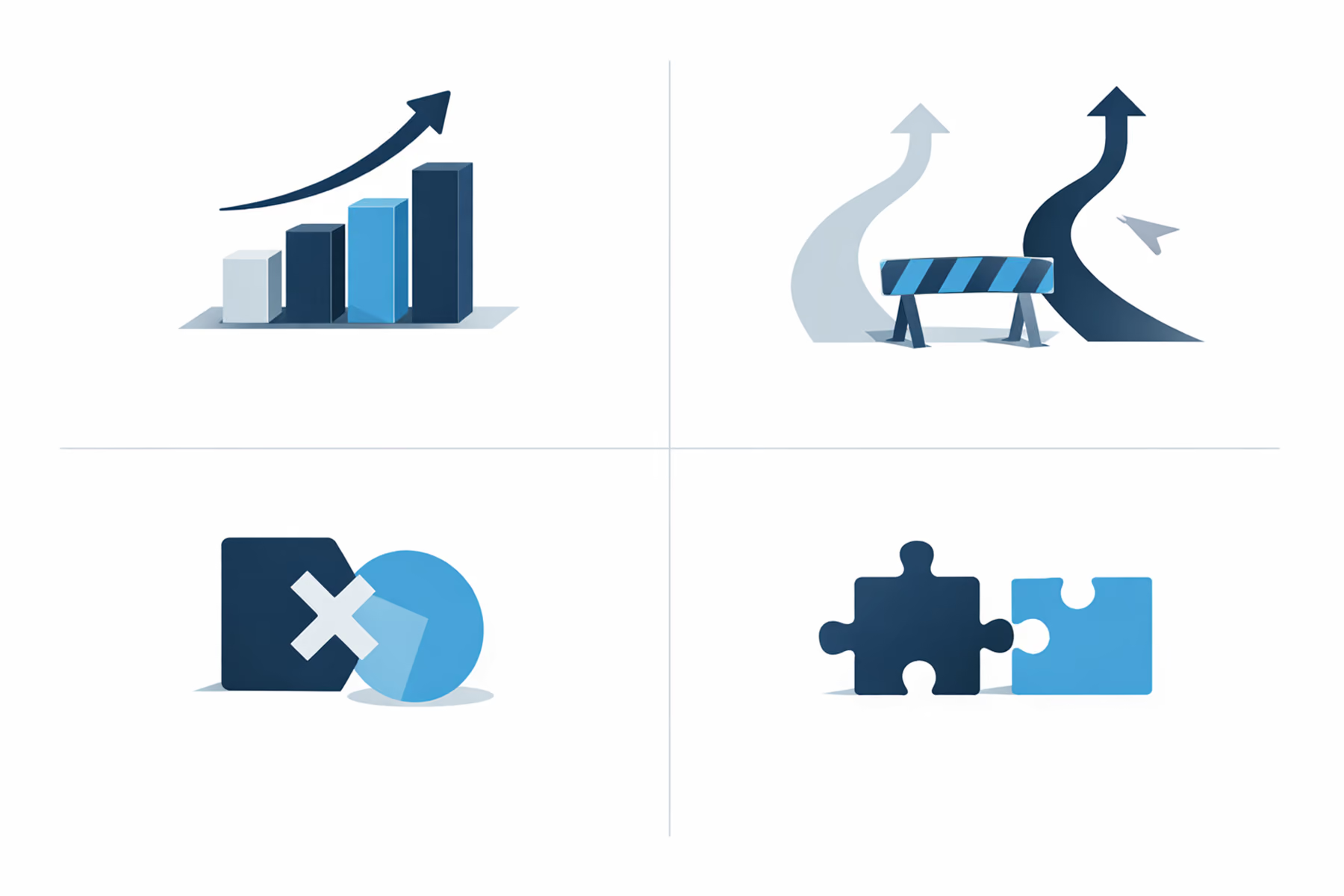
A mismatch can happen for several reasons. And not all of them are obvious.
1. Technical Needs Evolve
Sometimes the resource was perfect for Phase 1.
Then the roadmap gets more complex… Milestones shift… New systems integrate.
Suddenly, different skills are required. And it’s not failure. It’s evolution.
According to the Project Management Institute (PMI), dynamic project conditions and increasing complexity require adaptive planning and proactive change management — which includes anticipating shifts in scope and resources before momentum stalls.
2. The Role Outgrows the Designer
This happens more often than companies expect. A designer joins for repetitive production work. Over time, they hit a wall. There’s no clear growth path. Motivation drops.
As our CEO at Wandr, Lina Silva puts it: “We need to proactively think about how we’re going to replace that resource once they hit the wall.”
If the client environment doesn’t offer room to grow, we plan ahead. We don’t wait for frustration to turn into disengagement.
Research from SHRM shows that lack of growth opportunities is one of the primary causes of employee disengagement and performance decline. So proactivity protects everyone: the client, the resource, and the roadmap.
Proactivity protects everyone: the client, the resource, and the roadmap.
3. Cultural or Collaboration Mismatch

Technical skill is the baseline expectation.
True fit includes:
- Communication style
- Ownership mindset
- Alignment with internal processes
- Comfort working cross-functionally
If those elements aren’t aligned, productivity slows.
A Leadership IQ study found that among new hires, poor cultural fit was a far more common reason for failure than lack of technical skills — with 89 % of hiring failures linked to attitudes and cultural misalignment rather than skill gaps.
For more on how agencies should properly recruit and vet talent, see our guide on how UX staffing agencies should recruit, vet, and onboard designers.
4. The Role Was Misdefined
Sometimes the mismatch isn’t about the resource. It’s about the scope.
This happened in our work with Cinépolis – The client initially requested a UX writer.
What they actually needed was a product designer with UX writing skills.
The role was:
- 10% UX writing
- 90% product design
We quickly identified the misalignment and within 48 hours, we re-scoped the role and replaced the resource with the correct profile.
You can explore more about our partnership in our Cinepolis Case Study.
This is where a proactive staff augmentation company adds real value: not just staffing roles, but helping define them correctly.
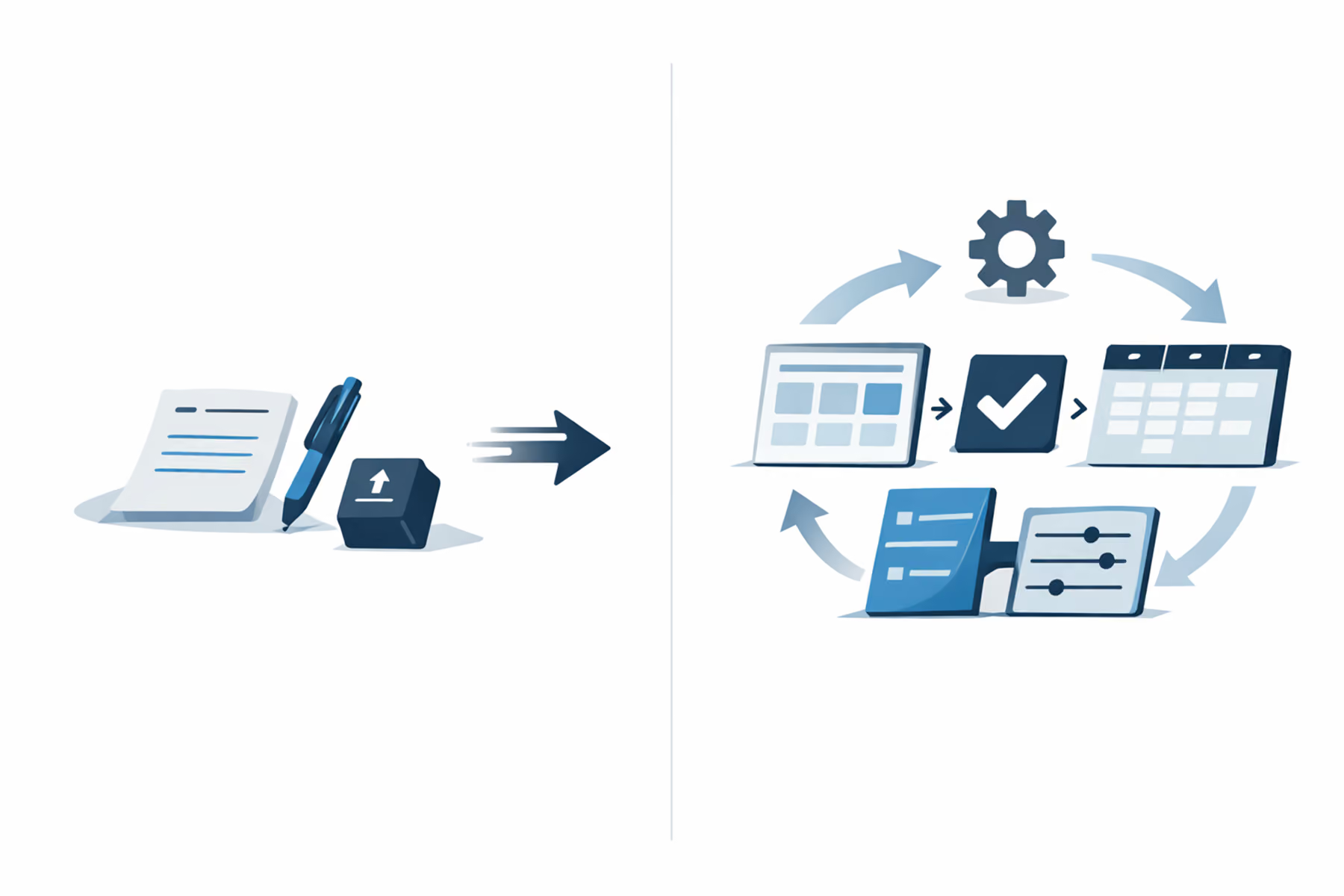
What to Expect from a Staff Augmentation Company When Replacing a UX Resource

If your augmentation partner doesn’t define replacement expectations upfront, that’s a red flag.
Here’s what enterprise teams should expect:
1. Speed: Replacement Within Days, Not Weeks
If a UX resource is not a match within the first week or two, replacement should happen fast.
At WANDR:
- We maintain Plan B, C, and D candidates.
- Replacements can happen within 72 hours.
- In urgent cases, even within 48 hours.
No long delays. No “we’ll start recruiting now.” The bench should already exist.
2. No-Questions-Asked Replacement Window
Early-stage testing periods matter. Your staff augmentation company should allow you to evaluate a UX resource quickly — and replace them without friction if expectations aren’t met.
This is about protecting your velocity.
3. Proactive Risk Forecasting
We don’t wait for breakdowns.
If we see:
- A designer lacking growth bandwidth
- A project shifting toward advanced product strategy
- A culture clash forming
We flag it early.
We’d rather have a strategic conversation before performance dips than scramble afterward. That’s the difference between staffing vendors and strategic partners.
4. Clear SLAs Around Replacement

Replacement expectations should be formalized in SLAs. Response times... Escalation paths... Communication protocols.
If you haven’t clarified those, review our article on Designer Staffing Agency SLAs: Response Times, Escalation, and What Teams Should Expect.
Transparency builds trust. Ambiguity creates risk.
The Real Role of a Staff Augmentation Company
Staff augmentation is not about “filling seats.”
It’s about:
- Maintaining momentum
- Reducing hiring risk
- Protecting delivery timelines
- Preserving cultural alignment
When done right, it becomes an extension of your leadership team.
That’s why our UX/UI Staff Augmentation Services are built around flexibility, accountability, and speed — not just talent supply.
How to Protect Your Team Before a Mismatch Happens with Your Staff Augmentation Company
Before onboarding a UX resource, align on:
- Exact scope and % skill breakdown
- Growth trajectory and career path clarity
- Milestones that may require different expertise
- Defined replacement timelines
The more specific the upfront alignment, the lower the risk later. But even with perfect planning, change happens. And so, what matters most is how quickly your staff augmentation company responds.
Final Thoughts
A UX resource not being the right fit isn’t a crisis.
A slow or reactive staffing partner is.
The best staff augmentation company doesn’t wait for problems to surface. They anticipate them. They plan for them. And when a mismatch happens, they replace without disrupting your roadmap. That’s how serious teams scale without friction.
If you’re evaluating augmentation partners or questioning your current structure don’t just ask, “What happens if the resource isn’t a fit?”
Ask:
- How fast can you replace?
- What’s your escalation process?
- Do you already have backup candidates lined up?
If those answers aren’t clear, your delivery is exposed.
Want a second opinion on your current staffing structure?
Request a strategic staffing assessment. We’ll show you exactly where the gaps are and how to close them before they slow you down.
