



For large organizations, staff augmentation services are not just about adding capacity. They’re about maintaining momentum as priorities shift, teams evolve, and roadmaps change quarter over quarter.
What determines whether staff augmentation becomes a long-term partnership, or slowly loses effectiveness over time, is not just the quality of talent, but how consistently that talent stays aligned with the business.
That alignment doesn’t happen by accident. It happens through well-run quarterly reviews.
Not as performance audits. Not as formal check-the-box meetings. But as structured alignment sessions that allow teams to adjust proactively instead of reacting once issues surface.
TL;DR: Why Quarterly Reviews Are Essential to Long-Term Staff Augmentation Services
Quarterly reviews are a critical part of enterprise-grade staff augmentation services. When run correctly, they align augmented teams with changing priorities, apply the same standards used for internal teams, and create a clear plan for what’s coming next—turning staff augmentation into a long-term strategic partnership rather than a short-term staffing solution.

Why Conducting Quarterly Reviews Matter with Your Staff Augmentation Services Agency

In large organizations, change is constant.
Product priorities shift. Leadership focus evolves. New initiatives surface. What was critical last quarter may no longer be the priority today.
Without a structured way to realign, even strong staff augmentation engagements can slowly drift out of sync with the business.
Research from McKinsey consistently shows that organizations with structured alignment processes significantly outperform those without them in strategy execution.
Quarterly reviews exist to prevent that drift. They create a regular cadence to reassess priorities, recalibrate expectations, and ensure staff augmentation services continue to support where the organization is headed, not where it used to be.
How to Run Quarterly Reviews with Your Staff Augmentation Services Partner
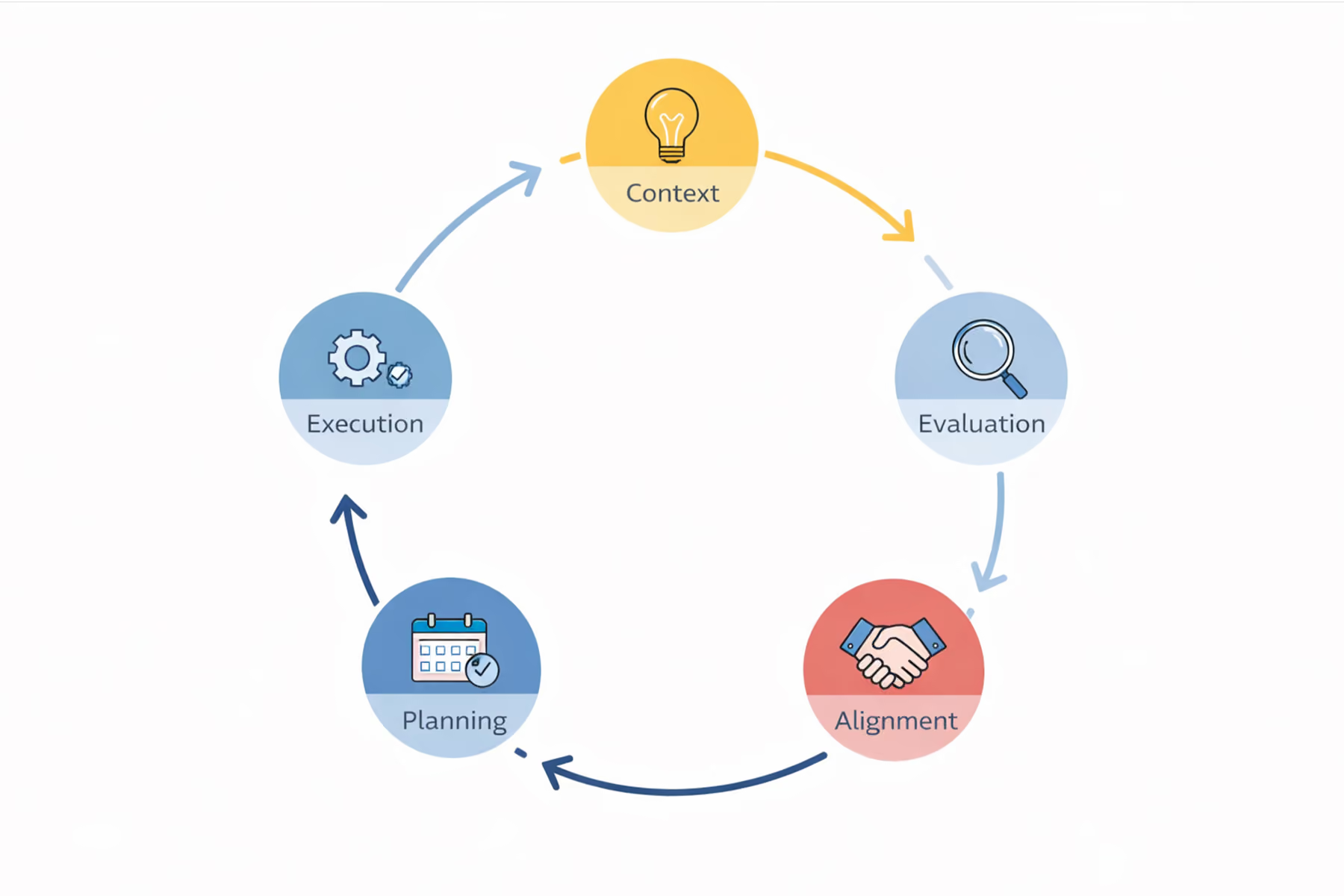
The most effective quarterly reviews are alignment conversations, not task-level retrospectives. The goal is not to revisit everything that happened over the past three months, but to ensure the team is prepared for what’s coming next.
Here’s how to run quarterly reviews in a way that actually strengthens staff augmentation partnerships.
Start With Business Context, Not Individual Deliverables
Quarterly reviews should begin with context.
Before discussing individual performance, align on what changed during the quarter:
- Shifts in product or platform priorities
- Changes in leadership direction or business goals
- Areas where teams experienced pressure or friction
This framing matters. When staff augmentation partners understand the broader business context, they can better align talent, workflows, and support around what actually matters rather than focusing narrowly on past deliverables.
Evaluate Augmented Talent Using the Same Standards as Internal Teams

One of the most important principles in effective staff augmentation services is consistency in evaluation. Research from Harvard Business Review explains that performance management systems built around clear expectations, frequent feedback, and shared standards improve team performance and accountability compared with traditional, irregular review processes.
Augmented team members should be evaluated using the same standards as internal employees:
- The same performance criteria
- The same expectations around ownership and impact
- The same feedback structure leadership already uses
This removes ambiguity and avoids the “external vs. internal” divide that often weakens staff augmentation engagements over time.
If expectations are unclear, quarterly reviews are the moment to clarify them, before misalignment becomes a problem.
Align Quarterly Reviews With Existing Performance Models
When organizations already operate on quarterly performance cycles, staff augmentation services should align directly to those models.
That alignment:
- Creates a shared performance bar
- Makes feedback easier to act on
- Reinforces accountability across teams
When a formal performance framework doesn’t exist, quarterly reviews still serve the same purpose through structured conversations focused on:
- What’s working well
- What needs improvement
- Where expectations are changing
That input becomes the foundation for training, upskilling, and preparation for upcoming challenges.
Be Explicit About What’s Changing Next Quarter
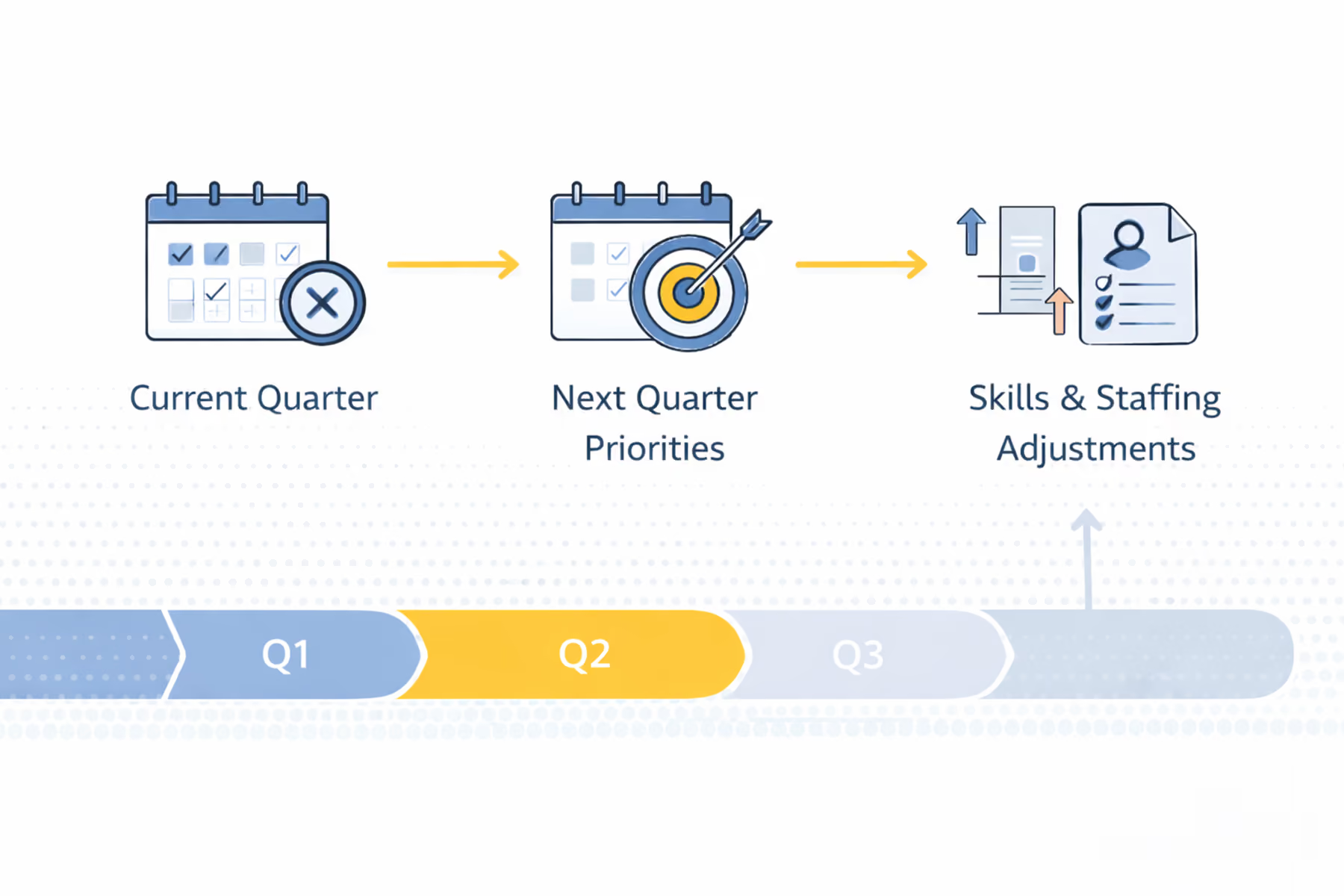
The most valuable part of a quarterly review is clarity around what’s coming next.
This includes:
- Roadmap changes
- New initiatives that require different skill sets
- Areas where expectations will increase or timelines will tighten
When upcoming priorities are clearly articulated, staff augmentation services can:
- Proactively upskill existing team members
- Adjust responsibilities before gaps appear
- Recommend changes to team composition early
This is how teams stay ahead of change instead of reacting under pressure.
Use Quarterly Reviews to Plan, Not to Surface Surprises
Quarterly reviews should never be the first time performance issues come up. Gallup research shows that teams with regular feedback cycles and structured performance conversations significantly outperform those relying on annual or reactive reviews.
In well-run staff augmentation services, feedback is ongoing. Performance concerns are identified early, improvement plans are set in motion immediately, and adjustments happen in real time when needed.
The quarterly review simply formalizes alignment and planning. It’s not a corrective moment—it’s a strategic one.
Support Smarter Scaling Decisions
Staffing needs in large organizations change frequently. Quarterly reviews provide a structured moment to reassess whether current staffing levels and skill sets still make sense.
These reviews help answer questions such as:
- Do we need to scale up or down next quarter?
- Do we need different capabilities than we did previously?
- Are current roles still aligned with business priorities?
This allows staff augmentation services to scale intentionally rather than reactively.
This is especially important in UI/UX staff augmentation, where priorities often shift between research, strategy, execution, and design systems. We explore this dynamic further in Why UX Staff Augmentation Isn’t Just a Short-Term Solution Anymore.
End Every Quarterly Review With a Clear Plan
A quarterly review should never end with vague takeaways.
It should produce:
- Clear alignment on expectations
- A plan to strengthen what’s already working
- Agreement on upcoming challenges
- Defined success criteria for the next quarter
When quarterly reviews end with a shared plan, staff augmentation services naturally shift from transactional support to long-term partnership.
That consistency is what keeps teams aligned quarter after quarter.
How Quarterly Reviews Turn Staff Augmentation Services Into Long-Term Partnerships

When run consistently and intentionally, quarterly reviews:
- Maintain alignment as priorities shift
- Reduce delivery and staffing risk
- Enable proactive skill development
- Support continuity across long-running engagements
Over time, this transforms staff augmentation from a short-term solution into a trusted, long-term partnership—one that evolves alongside the organization instead of falling out of sync with it.
Final Thoughts
Quarterly reviews are not administrative exercises.
They are the mechanism that determines whether staff augmentation services remain aligned as your organization evolves or slowly drift out of sync.
The difference between a short-term staffing solution and a long-term strategic partnership isn’t just talent quality. It’s structured alignment. It’s clarity around changing priorities. It’s proactive planning before pressure builds.
When quarterly reviews are run intentionally, they:
- Reduce delivery risk
- Strengthen accountability
- Support smarter scaling decisions
- Preserve continuity as roadmaps shift
Over time, that consistency compounds. What began as additional capacity becomes a trusted extension of your team.
If your current staff augmentation engagement feels reactive, inconsistent, or unclear about what’s coming next, it may not be a talent issue. It may be an alignment structure issue.
Want to evaluate whether your quarterly review process is actually protecting your roadmap?
Request a strategic staffing assessment and we’ll help you identify where alignment gaps exist — and how to structure your staff augmentation services for long-term continuity, not short-term patchwork.
Or explore how our UX/UI Staff Augmentation Services are built to support ongoing alignment, proactive planning, and scalable partnerships.
